History of Multan During Ancient Times
History of Multan: Introduction
History of Multan is one of the most fascinating chapters of South Asian history. Located in southern Punjab, Pakistan, Multan is considered one of the oldest continuously inhabited cities in the region. Known as the City of Saints, this city has witnessed the rise and fall of powerful empires, ancient civilizations, religious traditions, and notable leaders. Multan’s history dates back thousands of years, making it an important center of culture, commerce, and spirituality. Multan was historically known by names such as Mulatana and was famous for its magnificent Sun Temple. The city attracted merchants, travelers, pilgrims, and rulers from far away. Its location near important river routes made it a valuable centre for agriculture and international trade. Similar to other ancient cities such as Harappa and Mohenjo-daro, Multan preserves memories of an extraordinary ancient past.
History of Multan During Ancient Times
Multan’s early history is shrouded in mystery, and many details about the early settlement remain unknown. Historical evidence links the city to the ancient Marian people who lived in the area in the 4th century BC. Around 326 BC e. Alexander the Great invaded this territory during his Indian campaign. His army faced fierce resistance from the Mallians and Alexander himself was seriously wounded during the battle. This dramatic event marked an important moment in Multan’s history. Although Alexander eventually captured the city, his invasion did not establish definitive Macedonian control over the region. After his departure, the surrounding area was ruled by various regional kingdoms and powerful dynasties. Over the centuries, Multan has developed as a center of religious activity, agriculture, and regional trade.
History of Multan and the Arab Conquest
One of the most significant turning points in the history of Multan occurred in 712 CE, when the Arab commander Muhammad bin Qasim arrived in the region. After conquering Sindh, his forces advanced towards Multan and captured the city following strong resistance. This conquest brought Multan under Muslim political influence and connected it with the wider Islamic world.
During Arab rule, Multan became an important administrative and commercial centre. Arab historians described its wealth and the famous Temple of the Sun, which attracted visitors from different regions. The city was sometimes called the House of Gold because of its valuable religious offerings and economic prosperity. However, political and military conflicts also affect the region, creating difficult conditions for the population.History of Taxila,
Multan Under Muslim Dynasties and Sufi Saints
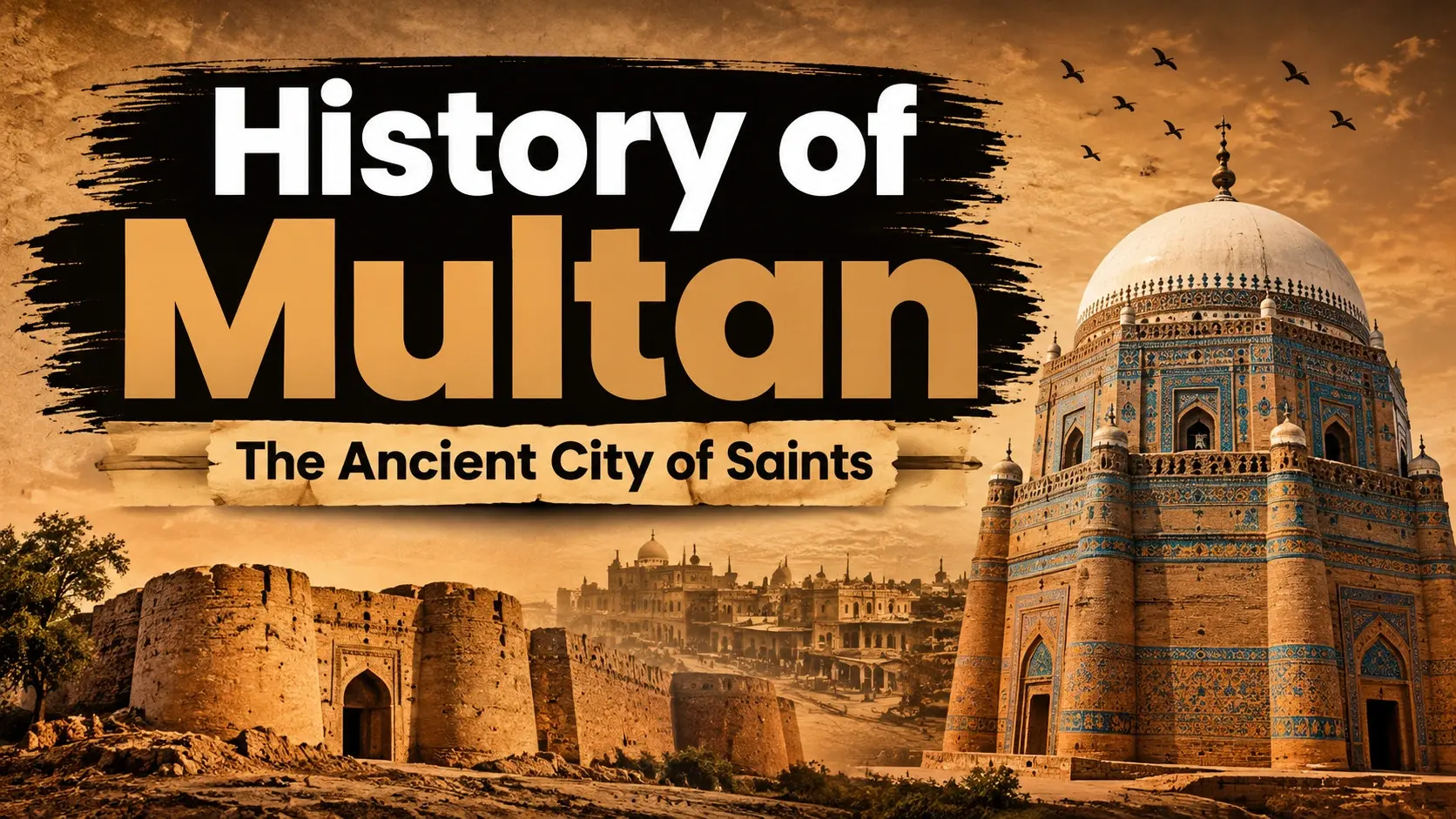
Multan’s medieval history witnessed the rise of several powerful dynasties, including the Ghaznavids, the Gurids, and the Delhi Sultanates. Mahmud of Ghazni captured Multan in the early eleventh century, while later rulers strengthened its political and military importance. Despite repeated invasions, the city remained a significant centre of regional administration and trade. A remarkable change occurred during the Middle Ages, when Sufi scholars and spiritual leaders made Multan an important center of Islamic learning. Hazrat Bahauddin Zakariya, Shah Rukhne Alam and Shah Shams Sabzwari became one of the most famous spiritual figures. Their teachings attracted followers from far away places. The magnificent temples built in their honor remain important historical monuments and explain why Multan is still called the City of Saints.
History of Multan During the Mughal Empire
Multan’s history enters a new important period under the Mughals. In 1526, the Mughal ruler Babur expanded his influence throughout the region, and Multan eventually became part of the Mughal regime. Emperor Akbar reorganized the empire and made Multan an important regional center. Agriculture, handicrafts, architecture, and commerce experienced significant growth during this period.
Multan became famous for its beautiful mosques, impressive tombs, traditional bazaars, and blue pottery. Merchants traded textiles, agricultural products, and handmade goods with distant regions. This peaceful period helped preserve the city\’s cultural identity, although political instability began increasing as Mughal authority weakened. The history of Multan during this era reflects both prosperity and the challenges of changing political power.
Sikh and British Rule in Multan
During the nineteenth century, Multan experienced another difficult chapter in its history. In 1818, Maharaja Ranjit Singh and the Sikh Empire captured the city after defeating its ruler, Nawab Muzaffar Khan. This conquest brought about significant political changes, and Multan became an important part of the expanding Sikh Empire.
In 1848, a rebellion against British rule escalated into a major conflict known as the Siege of Multan. British forces eventually captured the city in 1849 and placed it under colonial rule. British rule brought changes in administration, transportation, and infrastructure, but it also brought political difficulties and a loss of local independence. These events permanently influenced the history of Multan.
History of Multan After Independence
When Pakistan gained independence in 1947, Multan became an important city of Punjab. Its population, economy, educational institutions, and transportation networks gradually expanded. Agriculture remained a major part of its economy, while cotton, wheat, mangoes, textiles, and handicrafts contributed to its growing commercial importance.
Today, Multan is internationally recognised for its spiritual heritage, historic architecture, traditional blue pottery, and delicious mangoes. Famous attractions include the shrines of Bahauddin Zakariya and Shah Rukhne Alam, Multan Fort, and the historic bazaar. Despite problems with modern development and preservation of ancient sites, Multan’s history continues to fascinate historians, tourists, and heritage enthusiasts.
Conclusion
Multan’s history represents thousands of years of civilization, cultural exchange, religious development, and political change. Many powerful rulers have shaped its identity, from Alexander the Great and Muhammad bin Qasim to the Mughals, Sikhs and British. Although wars and invasions have destroyed some of its historical heritage, Multan has managed to preserve its unique traditions. Today, this remarkable city serves as a living symbol of Pakistan’s ancient history and cultural richness.History of the Ottoman Empire,