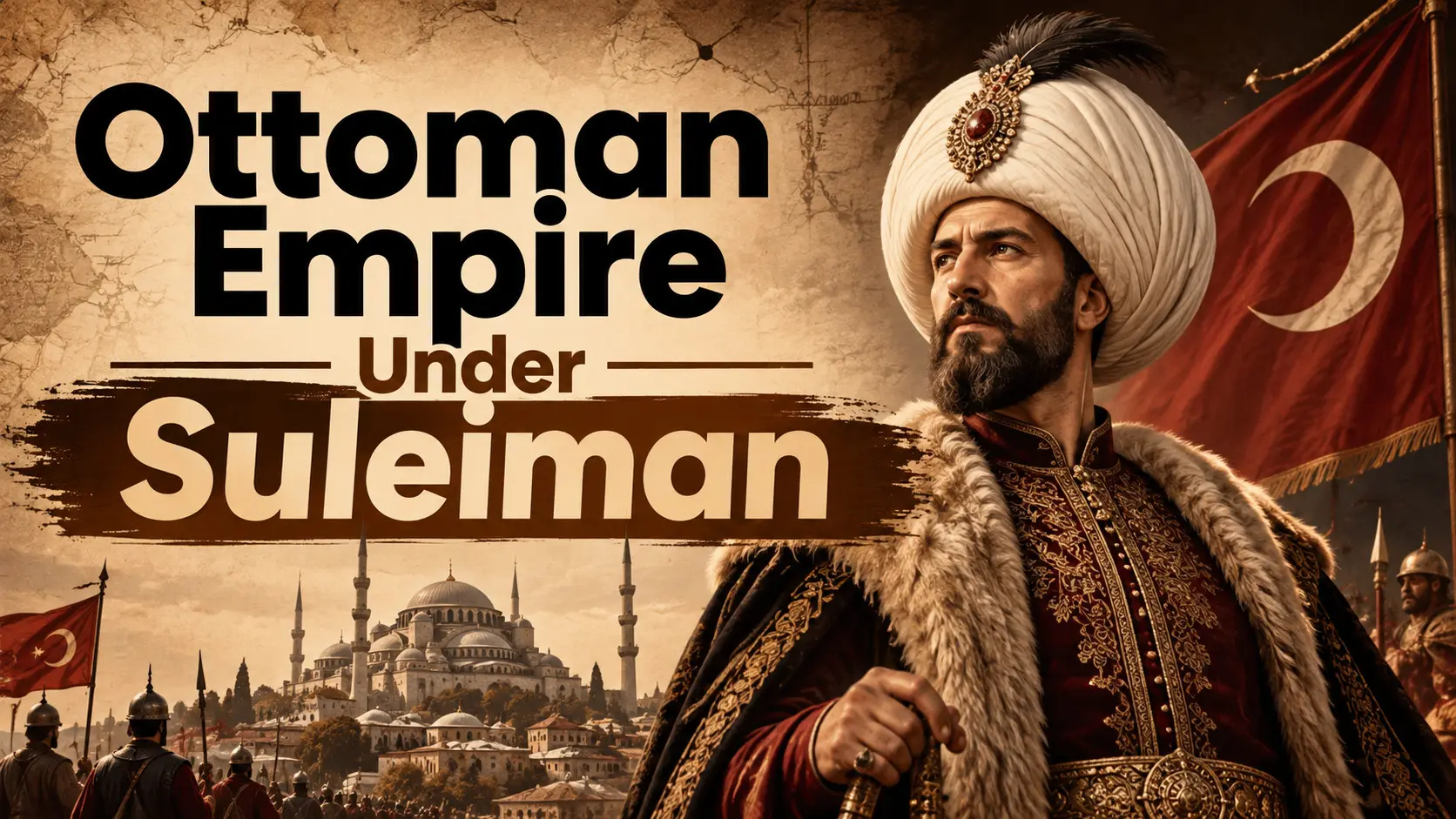
Ottoman Empire Under Suleiman:
Ottoman Empire Under Suleiman was one of the most powerful periods in the history of the Ottoman Empire. Suleiman I, also known as Suleiman the Magnificent, became the tenth Ottoman Sultan in 1520 after the death of his father, Selim I. In 1521, he captured Belgrade, an important European city. In 1522, his army conquered the island of Rhodes, strengthening Ottoman control over the eastern Mediterranean.
One of his greatest victories came in 1526 at the Battle of Mohács, where the Ottoman army defeated the Kingdom of Hungary. This victory increased Ottoman influence in Central Europe. The Ottoman Empire under Suleiman was also famous for its strong government and legal reforms. Suleiman passed important laws, improved government administration, and strengthened the justice system. For his contributions to jurisprudence, he became known as Qanuni, meaning Lawgiver.
The Ottoman Empire under Suleiman experienced remarkable cultural development during his reign. Architecture, literature, education, and flourishing arts. Famous architect Mimar Sinan designed magnificent buildings such as Istanbul’s Suleymaniye Mosque, which became one of the masterpieces of Ottoman architecture. Suleiman died in 1566 during a military campaign in Hungary, having ruled for about 46 years.
In conclusion, the Ottoman Empire under Suleiman’s rule achieved extraordinary heights in military power, political influence, architecture, and culture. His reign became known as the Golden Age of the Ottoman Empire, leaving behind a remarkable legacy that continues to shape world history for centuries.
All episodes of The Rise of the Ottomans
-
1
 Osman’s Dream
1 min read
A frontier chief, a sheikh's daughter and a dream of a great tree.
-
2
Bursa, the First Capital
1 min read
After a long siege, Orhan takes a Byzantine city and gives the Ottomans a home.
-
3
The Fall of Constantinople
1 min read
Spring 1453: a twenty-one-year-old sultan, giant cannon and ships carried over a hill.
-
4
 the powerful ottomans
2 min read
-
5
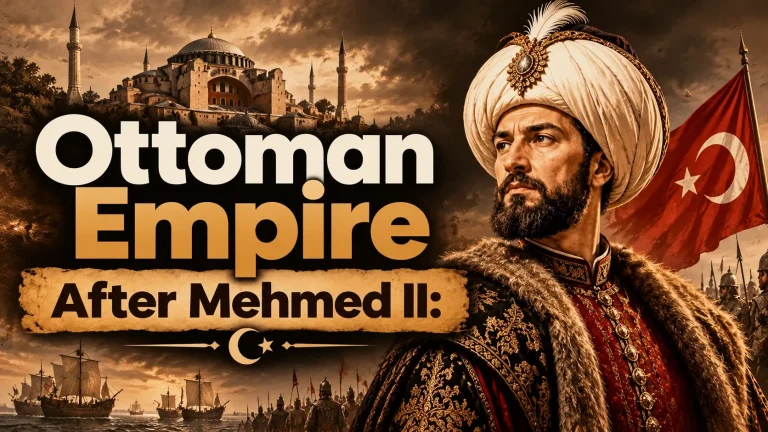
 Ottoman Empire After Mehmed II
3 min read
-
6
 Ottoman Empire Under Suleiman
2 min read