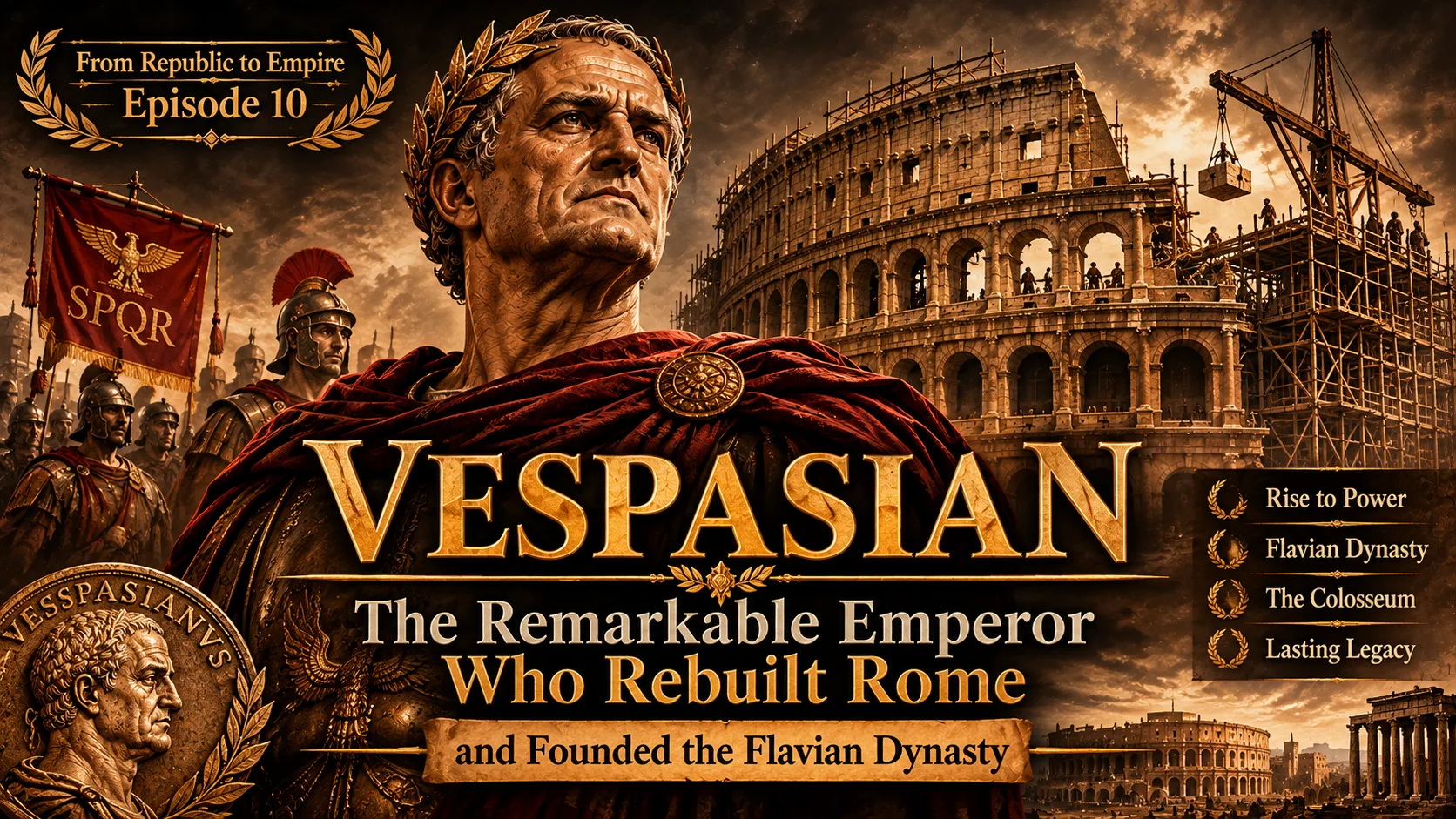
Vespasian Emperor: The Remarkable Emperor Who Rebuilt Rome and Founded the Flavian Dynasty
Introduction
Vespasian Emperor, Vespasian Roman Emperor became one of the most important leaders in ancient Roman history after the political chaos of AD 69. Following the Year of the Four Emperors, he took control of Rome, restored political stability, and founded the Flavian Dynasty.
His rise marked an important turning point in Roman history. Through financial reforms, military leadership, political changes, and ambitious construction projects, Vespasian helped Rome recover from civil war. His reign also began the construction of one of the world’s most famous monuments: the Colosseum.
Vespasian Emperor Rise to Power
Vespasian Emperor, Vespasian came from a relatively modest Italian family and built his reputation through military service and political experience. He gained recognition during the Roman invasion of Britain in AD 43, demonstrating his abilities as a military commander.
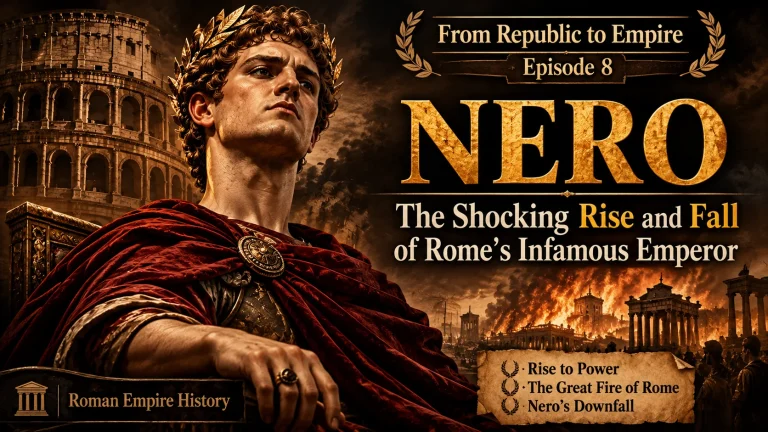
Later, Emperor Nero appointed him to lead Roman forces during the Jewish revolt in Judaea in AD 67. His military experience made him an influential figure within the empire.
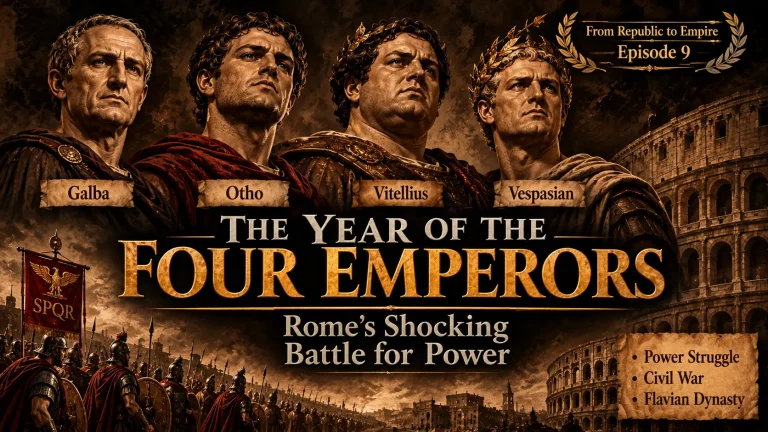
Following Nero’s death in AD 68, Rome entered a period of political instability. Galba, Otho, and Vitellius successively claimed the imperial throne, but none managed to establish lasting control.
In AD 69, eastern Roman legions declared their support for Vespasian. His forces eventually defeated Vitellius’s supporters, allowing him to become emperor. This victory ended the Year of the Four Emperors and established the Flavian Dynasty.
Rebuilding Rome After Civil War
Vespasian Emperor, When Vespasian took power, Rome faced serious financial difficulties and political uncertainty. Years of civil conflict had weakened the government and damaged the empire’s stability.
Vespasian focused on restoring the imperial treasury and improving government administration. He introduced new revenue measures, strengthened tax collection, and reduced unnecessary expenses.
His practical financial policies helped the government recover its resources and supported important public projects.
He also worked to restore confidence in imperial leadership. His straightforward approach to government and attention to public administration helped Rome move beyond the instability that followed Nero’s death.
Military Achievements and the Flavian Dynasty
Vespasian Emperor, Vespasian’s military background played a major role in his success as emperor. His campaigns in Britain and Judaea established his reputation as an experienced Roman commander.
During his reign, his son Titus continued the campaign against the Jewish revolt. In AD 70, Roman forces captured Jerusalem and destroyed the Second Temple, an event with lasting historical and religious significance.
Vespasian also strengthened the future of his dynasty by preparing his sons, Titus and Domitian, to succeed him. Together, Vespasian, Titus, and Domitian ruled Rome as the three emperors of the Flavian Dynasty, which lasted until AD 96.
The Construction of the Colosseum
Vespasian Emperor, One of Vespasian’s greatest achievements was beginning the construction of the Flavian Amphitheatre, later known as the Colosseum.
Construction began around AD 70–72 on land that had been part of Emperor Nero’s enormous palace complex. The project represented a change in imperial priorities by transforming a former private imperial space into a major public entertainment venue.
The Colosseum was designed to host gladiatorial contests, public spectacles, and other events that attracted thousands of spectators.
Vespasian did not live to see the building completed. His son Titus officially inaugurated it in AD 80, while Domitian later added further structures. The Colosseum became one of the most recognizable symbols of ancient Roman civilization.
The Death and Legacy of Vespasian
Vespasian Emperor, Vespasian ruled from AD 69 until his death in AD 79. His ten-year reign helped restore Rome’s finances, strengthen imperial authority, and establish a new ruling dynasty.
He was succeeded by his son Titus, making the transition of power within the Flavian family an important moment in Roman imperial history.
Although Vespasian’s reign faced military and political challenges, his achievements created a stronger foundation for the empire. His reforms and building projects demonstrated how effective leadership could help Rome recover from a period of deep instability.Vespasian – The Roman Empire: In the First Century
Conclusion: From Republic to Empire
Vespasian Emperor, The story of Vespasian brings our journey through the transformation of Rome into a powerful empire to an important chapter of its history.
From the fall of the Roman Republic and the rise of Augustus to the Julio-Claudian emperors, Nero’s downfall, and the Year of the Four Emperors, Rome experienced political struggles, ambitious rulers, military conflicts, and remarkable achievements.
Vespasian emerged from this turbulent history as a leader who restored stability and founded the Flavian Dynasty. His legacy lives on through his reforms, his family’s rule, and the construction of the Colosseum.
The journey from Republic to Empire shows how Rome transformed its political system and became one of the most influential civilizations in world history. Its emperors, monuments, laws, and military achievements continued to shape societies for centuries.
This concludes our From Republic to Empire series — a journey through the rise of Roman power, the emperors who shaped its destiny, and the legacy of one of history’s greatest civilizations.
All episodes of From Republic to Empire
-
1
 Crossing the Rubicon
1 min read
January 49 BC: a general reaches a small river and makes a choice there is no coming back from.
-
2
The Ides of March
1 min read
15 March 44 BC: the dictator for life walks into a meeting of the Senate.
-
3
Augustus, the First Emperor
1 min read
He never called himself king, yet he ruled Rome for forty years.
-
4
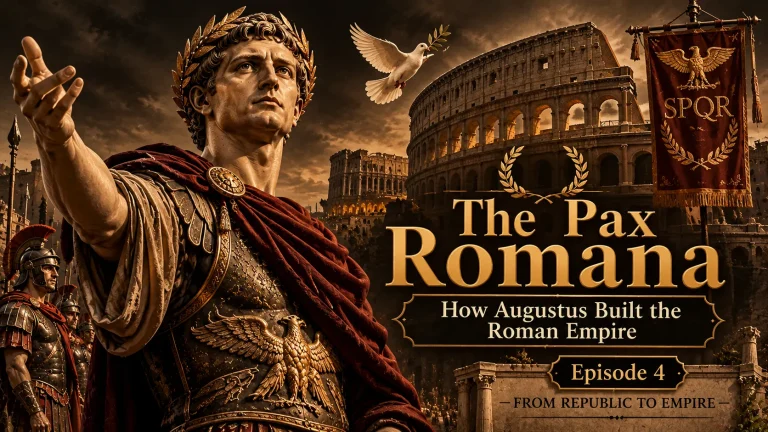
 Episode 4: The Pax Romana — How Augustus Built the Roman Empire
3 min read
-
5
 Episode 5:Tiberius Roman Emperor: The Dark Side of Power in Ancient Rome
5 min read
-
6
 Episode 6: Caligula Roman Emperor: The Emperor Who Shook Rome
4 min read
-
7
 Episode 7: Claudius – The Unexpected Emperor Who Changed Rome
4 min read
-
8
 Episode 8 : Nero – The Shocking Rise and Fall of Rome’s Infamous Emperor
5 min read
-
9
 Episode 9: The Year of the Four Emperors – Rome’s Shocking Battle for Power
4 min read
-
10
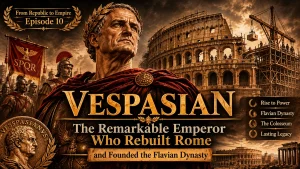 Episode 10:Vespasian Emperor: The Remarkable Emperor Who Rebuilt Rome and Founded the Flavian Dynasty
5 min read