History of Hattusa: Introduction
“History of Hattusa” tells the fascinating story of one of the greatest ancient cities of the Bronze Age. Hattusa, located in modern-day Boazkale, Çorum Province, Turkey, was the magnificent capital of the Hittite Empire. Hattusa’s history reflects the power, intelligence, culture, and amazing achievements of an ancient civilization that influenced much of Anatolia and northern Syria. Its impressive ruins still testify to the extraordinary strength of this forgotten empire.
The Early Settlement of Hattusa
History Of Hattusa began long before it became the capital of a powerful empire. Archaeological discoveries show that people lived in this region during the third millennium BCE. During the nineteenth and eighteenth centuries BCE, Assyrian merchants established an important trading settlement in the Lower City. History Of Hattusa took a difficult turn when a major fire destroyed the early settlement around 1700 BCE. Ancient texts relate this destruction to Anitta, the ruler of Kushala. Despite this unfortunate event, the city eventually recovered.
Hattusa Becomes the Hittite Capital
History Of Hattusa entered a glorious new chapter during the seventeenth century BCE when King Hattusili I established it as the capital of the Hittite Kingdom. Its strategic location offered excellent opportunities for defence and political control. Under the rule of powerful rulers, the city became an impressive center of government, religion, and commerce. Hattusha’s history became closely intertwined with the emergence of the Hittite Empire, which became one of the most powerful political powers in the ancient Near East. History of Troy
Architecture, Temples, and Famous Gates
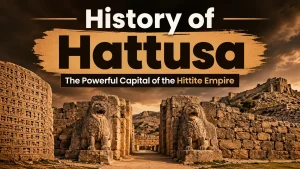
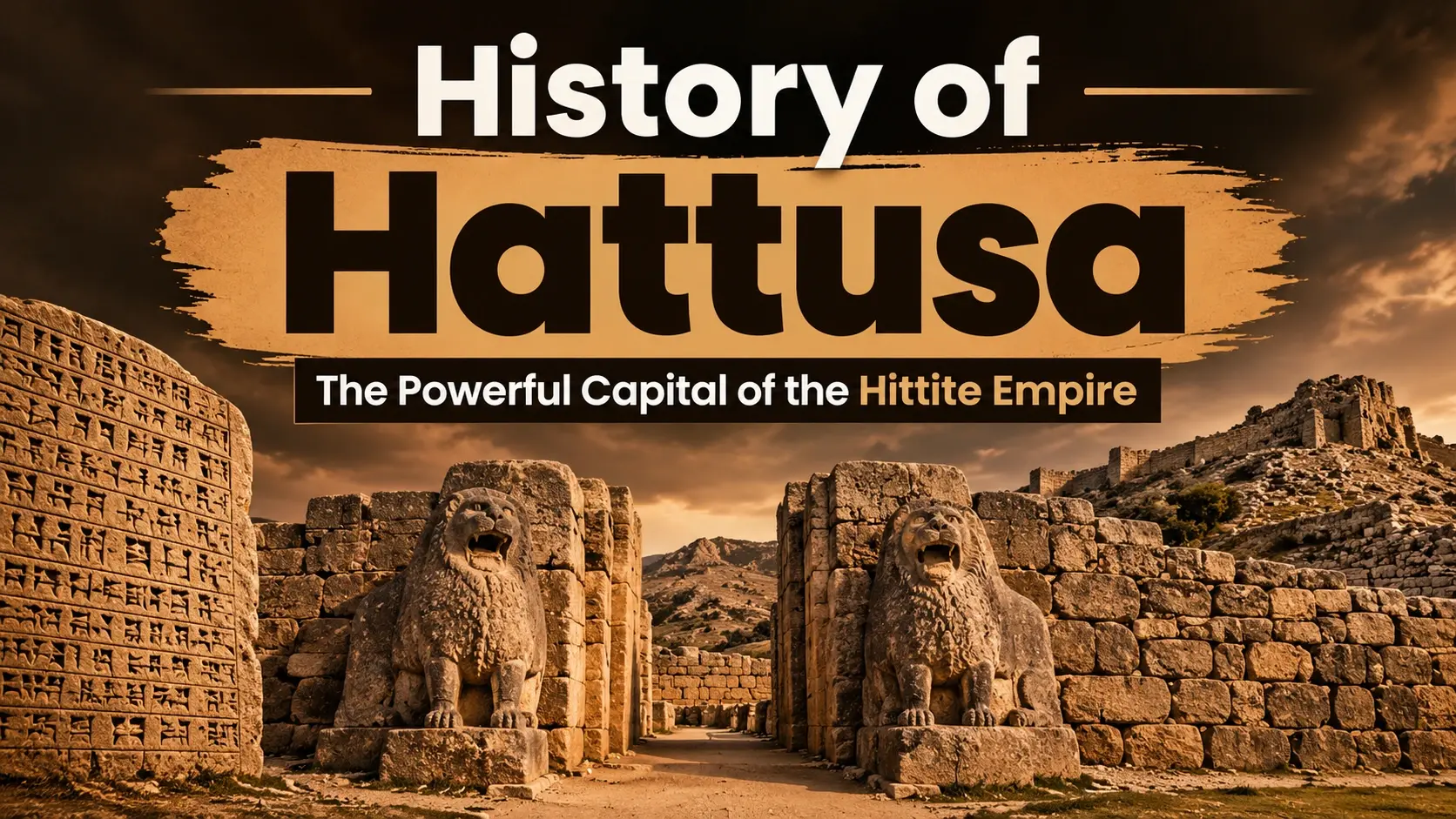
Hattusa’s history is particularly noteworthy for its unusual architecture and advanced urban planning. The settlement was surrounded by a huge defensive wall, and important entrances were guarded by impressive gates. The famous Lion’s Gate was adorned with beautifully carved stone lions, symbolizing strength and protection. Another notable structure is the King’s Gate, decorated with impressive statues of warriors. Hattusa’s history also includes a great temple in the lower city that served as an important religious center. These magnificent structures demonstrate the artistic skill and technical achievements of the Hittites.
Religion and the Yazilikaya Sanctuary
Religion played an important role in Hattusa’s history. The Hittites worshiped many gods and goddesses, and their religious traditions reflected the influence of neighboring civilizations. One of the most notable sacred sites was Yazilikaya, an open-air rock temple near the town. The natural stone rooms are decorated with beautiful carvings of sacred figures and religious processions. The story of Hattusha reveals how much religion influenced daily life, royal rituals, and political authority in the Hittite Empire.
The Decline and Fall of Hattusa
Despite remarkable achievements, History of Hattusa eventually entered a period of tragedy. Around 1190 BC, during the reign of Suppiluliuma II, the Hittite empire collapsed amid economic hardship, political instability, and internal conflict. The capital was abandoned and its once mighty royal buildings and magnificent temples gradually fell into disrepair. Hattusa’s story shows that even powerful civilizations can disappear when political and economic challenges become insurmountable. Phrygian settlers then returned to the area, and small settlements emerged in subsequent periods.
Rediscovery and UNESCO World Heritage Status
History of Hattusa began in the 19th century when European explorers visited its ancient ruins and attracted worldwide attention. Subsequent archaeological excavations uncovered royal archives containing thousands of clay tablets written in cuneiform. These discoveries provided valuable information about Hittite government, religion, diplomacy, and daily life. Today, History of Hattusa remains an important part of world heritage. In 1986, UNESCO officially recognised the ancient city as a World Heritage Site, protecting its extraordinary archaeological remains for future generations.UNESCO World Heritage – Hattusa
Conclusion
History of Hattusa is a powerful reminder of human creativity, ambition, and the rise and fall of civilizations. Its temples, gates, royal buildings and ancient inscriptions preserve the remarkable legacy of the Hittite Empire. Even though the city lost its political importance thousands of years ago, its historical significance remains unforgettable.