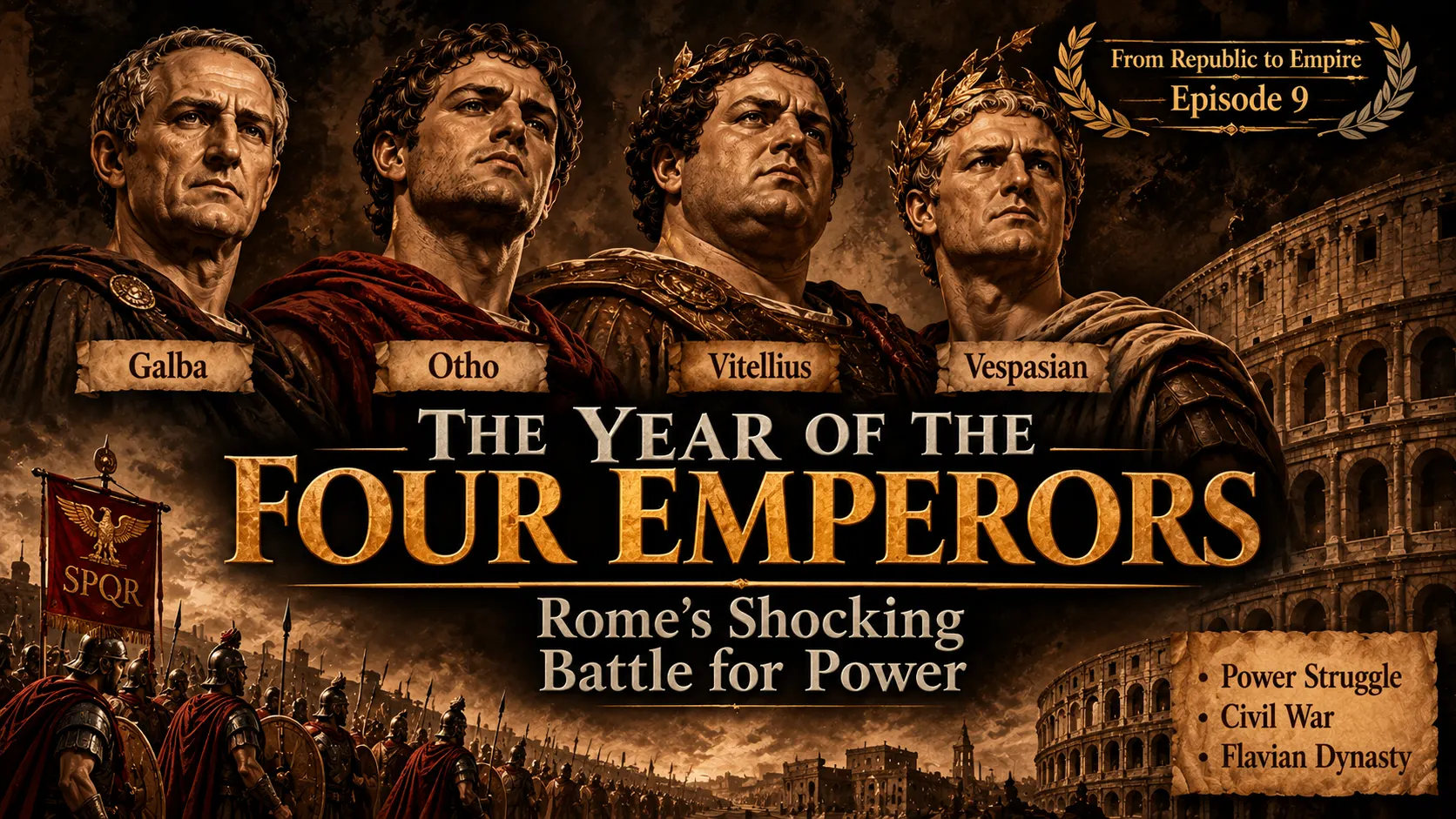
The Year of the Four Emperors: Rome’s Shocking Battle for Power
Introduction
Year of the four emperors, The Julio-Claudian dynasty came to an end with the death of Emperor Nero in AD 68, and a new period of political unrest began in Roman history. Rome had to contend with a major conflict about who would rule the empire for the first time in decades. Four men—Galba, Otho, Vitellius, and Vespasian—claimed the imperial throne in less than a year.
The Year of the Four Emperors (AD 69) was the name given to this turbulent time. Rome became a battleground for imperial control due to military uprisings, political treachery, and bloody conflicts.
The Rise of Galba
Year of the four emperors, Galba became the first significant contender for the imperial crown following Nero’s demise. As the governor of Hispania Tarraconensis, he was backed by a number of Roman armies.
Galba was acknowledged as emperor in AD 68 and eventually made his way into Rome. After Nero’s contentious rule, many Romans initially thought he would bring stability and discipline back.
However, Galba’s unfavourable financial choices and his rigid political stance quickly caused him to lose support. The military was also disgruntled by his failure to honour significant backers.
Opposition among the imperial court started to build as his position grew weaker.
Otho’s Short Reign
Year of the four emperors, Former Galba supporter Otho turned into one of his most formidable political opponents. Tensions rose when Galba chose Lucius Calpurnius Piso to succeed Otho.
With the Praetorian Guard’s assistance, Otho launched an uprising on January 15, AD 69. Otho was crowned emperor after Galba and Piso were slain.
Otho’s triumph did not, however, result in peace in Rome. Another candidate who contested his power, Vitellius, had already received the allegiance of the soldiers positioned along the Rhine.The Roman Empire: The Year of the Four Emperors – PBS
Vitellius and the Battle for Rome
Year of the four emperors, Strong legions based in Germania sided with Vitellius. In an attempt to overthrow Otho, his army advanced toward Italy.
The two armies engaged in combat at the First Battle of Bedriacum in April of AD 69. Otho had little hope of holding onto his position once Vitellius’s army won.
Otho made the decision to take his own life rather than go on the civil war and inflict more deaths. Vitellius was able to succeed him as Roman emperor after his death.
But Vitellius also had significant issues. Financial challenges, political opposition, and mounting opposition from influential military officers beset his government.
Vespasian and the Fall of Vitellius
Year of the four emperors, Vespasian emerged as another formidable opponent as Vitellius found it difficult to keep control. He was a seasoned Roman general who had achieved military distinction in operations in Judea and Britain.
Eastern legions proclaimed their allegiance to Vespasian and acknowledged him as emperor in AD 69. His supporters marched into Rome after progressively seizing control of key military positions.
A significant turning point occurred in October AD 69 with the Second Battle of Bedriacum. Vitellius’s supporters were routed by Vespasian’s army, undermining the emperor’s residual power.
Vespasian’s army arrived in Rome in December. Vitellius’ brief and turbulent rule came to an end when he was apprehended and executed.
The Beginning of the Flavian Dynasty
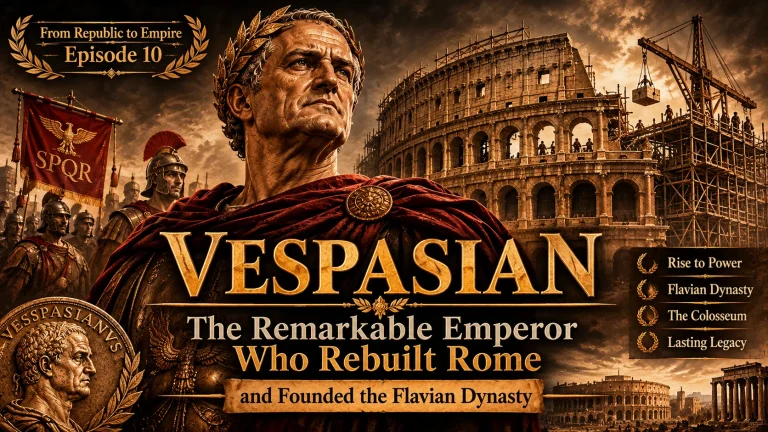
Year of the four emperors, Vespasian succeeded Vitellius as emperor in AD 69 after securing the imperial throne.
The Year of the Four Emperors came to an end with his victory, and the Flavian dynasty became the new reigning family.
Vespasian concentrated on re-establishing governmental authority, reconstructing Rome’s economy, and fortifying the empire, in contrast to the political unrest that followed Nero’s demise.
A new era of military and architectural advancement, including the building of the renowned Colosseum, also began during his rule.
Conclusion
Year of the four emperors, One of the most turbulent times in ancient Roman history was the Year of the Four Emperors. Galba, Otho, Vitellius, and Vespasian battled for control of the empire in less than a year, illustrating the Roman military’s tremendous power in selecting rulers.
In the end, Vespasian’s triumph established the Flavian dynasty and put an end to the civil war.
However, Rome’s tale was far from finished. One of the most famous monuments in history was being left behind by a new emperor who was getting ready to reconstruct the empire.
Continue the From Republic to Empire series to discover how Vespasian restored Rome and began the remarkable rise of the Flavian dynasty.
All episodes of From Republic to Empire
-
1
 Crossing the Rubicon
1 min read
January 49 BC: a general reaches a small river and makes a choice there is no coming back from.
-
2
The Ides of March
1 min read
15 March 44 BC: the dictator for life walks into a meeting of the Senate.
-
3
Augustus, the First Emperor
1 min read
He never called himself king, yet he ruled Rome for forty years.
-
4
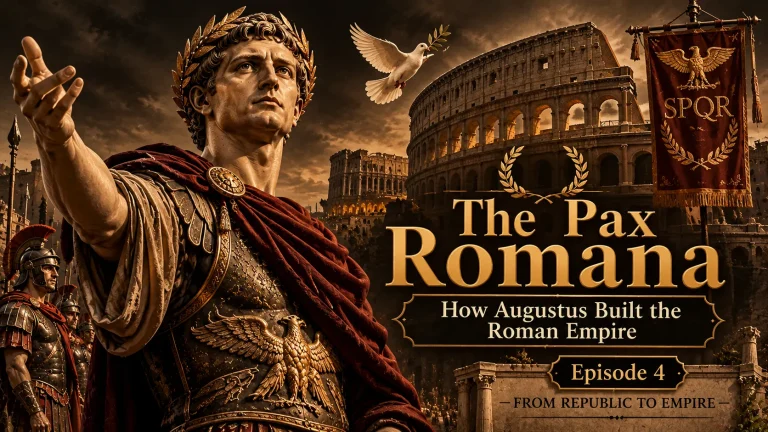
 Episode 4: The Pax Romana — How Augustus Built the Roman Empire
3 min read
-
5
 Episode 5:Tiberius Roman Emperor: The Dark Side of Power in Ancient Rome
5 min read
-
6
 Episode 6: Caligula Roman Emperor: The Emperor Who Shook Rome
4 min read
-
7
 Episode 7: Claudius – The Unexpected Emperor Who Changed Rome
4 min read
-
8
 Episode 8 : Nero – The Shocking Rise and Fall of Rome’s Infamous Emperor
5 min read
-
9
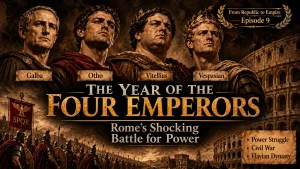 Episode 9: The Year of the Four Emperors – Rome’s Shocking Battle for Power
4 min read
-
10
 Episode 10:Vespasian Emperor: The Remarkable Emperor Who Rebuilt Rome and Founded the Flavian Dynasty
5 min read