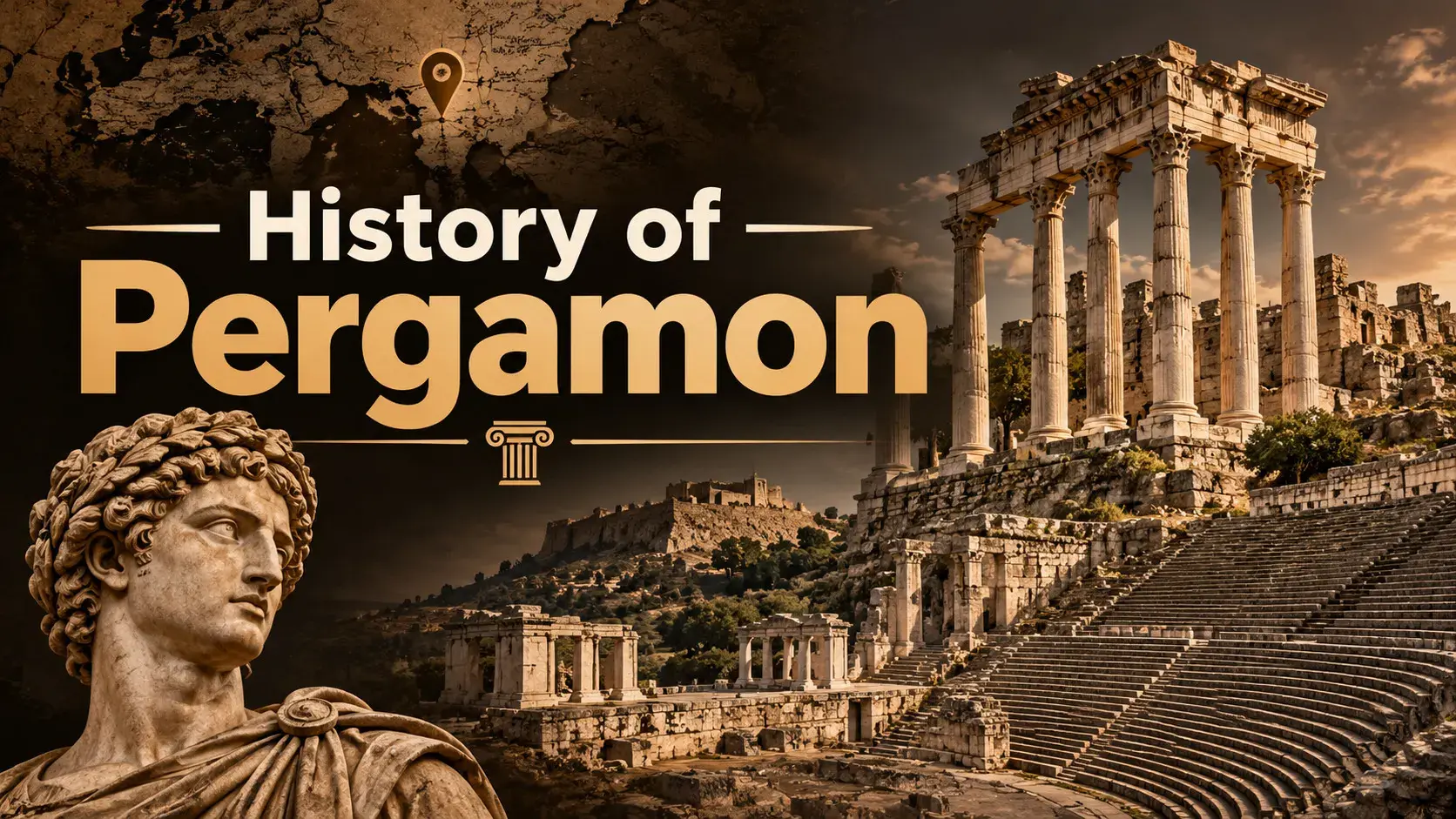
History of Pergamon: The Rise and Legacy of an Ancient City
Introduction:
The history of Pergamon transports us to one of Asia Minor’s most amazing ancient cities, which is now in Turkey. Pergamon, renowned for its magnificent architecture, strong rulers, vibrant culture, and renowned library, developed into a significant hub of political influence and scholarship. Its narrative illustrates both the impact of the Roman Empire and the accomplishments of ancient Greek society.
The Rise of Pergamon
During the third century BC, Pergamon’s history gained particular significance. Alexander the Great’s empire was split up among several monarchs following his death. Under the Attalid dynasty, Pergamon progressively grew into a strong kingdom during this time.
Eumenes I was one of its most powerful leaders, contributing to the growth of the city’s authority and autonomy. Eumenes II later fortified the realm and made Pergamon a significant political and cultural hub.
Pergamon: A Center of Knowledge
Pergamon’s renowned library is one of its greatest accomplishments. In competition with the renowned Library of Alexandria in Egypt, the Library of Pergamon grew to become one of the biggest libraries in antiquity.
It purportedly drew academics, authors, and intellectuals and held about 200,000 scrolls. Additionally, parchment—a writing material derived from animal skin—became linked to pergamon. The word “parchment” has historically been associated with the name of the city.
Architecture and Cultural Achievements
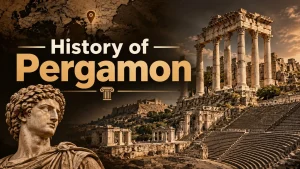
History Of Pergamon was well-known for its stunning structures, temples, theaters, and monuments. Among its most remarkable architectural accomplishments was the Great Altar of Pergamon. It was embellished with intricate carvings depicting the conflict between giants and gods.
The Sanctuary of Asclepius, a significant medical facility honoring the Greek god of medicine, was also located in the city. In search of healing and treatment, people traveled from various areas.
Because of these accomplishments, Pergamon’s history became a significant component of Greek architecture, medicine, and art.History of Taxila
History Of Pergamon Under Roman Rule
Attalus III, the final Attalid monarch, gave his realm to the Roman Republic in 133 BC. Pergamon thereafter joined the Roman sphere of influence.
The city kept expanding and remained a significant hub for government, trade, and culture during Roman authority. Its cultural significance persisted for centuries even after its political independence ended.
The Decline and Historical Legacy
Pergamon progressively lost part of its economic and political significance throughout time. Its demise was influenced by shifting trade routes, governmental changes, and the expansion of other cities.
History Of Pergamon ruins can be seen in Turkey close to the present-day city of Bergama. Temples, theaters, libraries, and striking monuments are among its archeological remnants.
History Of Pergamon past serves as a reminder of the contributions ancient societies made to human knowledge, medicine, architecture, and culture. Historians, scholars, and tourists with an interest in antiquity are still drawn to its legacy.History and Cultural Heritage of Pergamon