History of Lahore: 7 Amazing Facts About Its Glorious Past
Introduction
History Of Lahore transports us to one of South Asia’s oldest and most culturally significant cities. Pakistan’s Punjab city, Lahore, is well-known for its exquisite gardens, traditional cuisine, ancient structures, and rich cultural legacy. The Ghaznavids, Mughals, Sikhs, and British are just a few of the strong empires that have come and gone from the city. Every street and historical site has an intriguing tale to tell about its illustrious past.
Another name for Lahore is the “Heart of Pakistan.” For those who enjoy history, architecture, and culture, it is among the most fascinating cities due to its historical significance.
1. Ancient History of Lahore
Legends and historical debates surround Lahore’s early beginnings. The city was called after Loh, the son of Rama, according to folklore. Historians disagree on the precise date of its founding, nevertheless.
History Of Lahore may have existed for several centuries prior to the entrance of Muslim monarchs, according to historical evidence. During his seventh-century voyage to South Asia, the Chinese explorer Xuanzang also made reference to the area.
Due to its proximity to crucial commercial routes linking Central Asia and the Indian subcontinent, History Of Lahore grew to be a significant settlement. The city became a significant cultural and commercial hub thanks to the visits of merchants, tourists, academics, and many communities.
2. History of Lahore During the Ghaznavid Period
The Ghaznavid era marked the beginning of one of the most significant periods in Lahore’s history. Around 1021–1022 AD, Mahmud of Ghazni took control of Lahore.
Following the conquest, Lahore developed into a significant administrative and political hub for the Ghaznavid Empire. The city grew as a hub for Islamic culture, trade, and education.
Malik Ayaz, a significant governor of Lahore, has long been linked to the city’s growth and reconstruction. Lahore drew academics, poets, traders, and artisans throughout this time, and it also grew in political significance.
3. History of Lahore During the Mughal Empire
One of the most magnificent eras in History Of Lahore was the Mughal era. With their magnificent structures, lovely gardens, mosques, and regal palaces, the Mughal rulers completely changed the city.
In 1584, Emperor Akbar established Lahore as his capital, where he stayed until 1598. The city’s defensive walls were reinforced and Lahore Fort was rebuilt during his rule.
Later, Lahore’s beauty was further enhanced under the reigns of Emperor Jahangir and Emperor Shah Jahan. During this time, a number of well-known historical monuments were built:
- Fort Lahore
- Gardens of Shalimar
- The Tomb of Jahangir
- Mosque of Wazir Khan
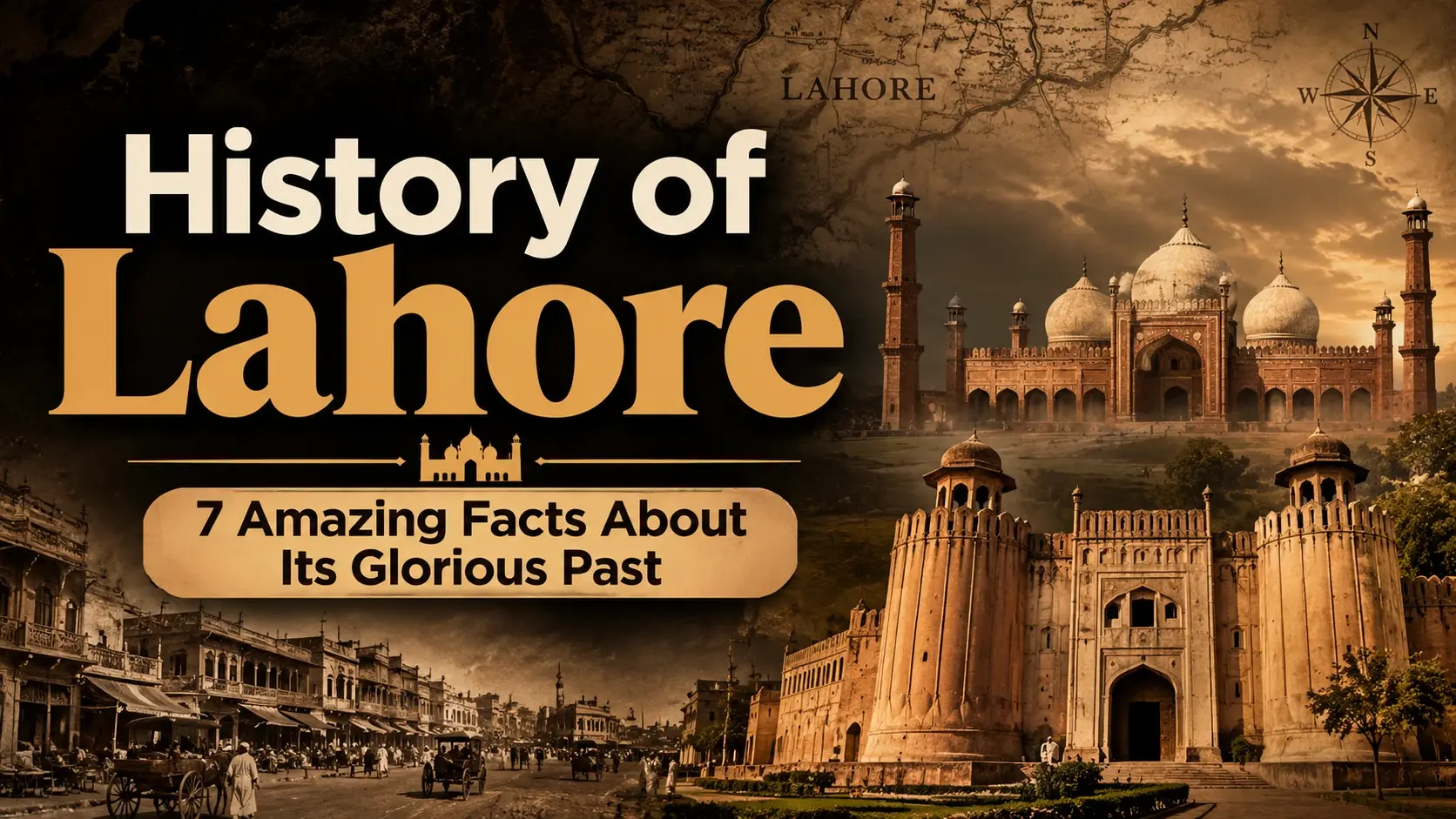
By constructing the renowned Badshahi Mosque in 1673, Emperor Aurangzeb also made a significant architectural contribution. Visitors from all over the world are still drawn to these majestic buildings.
4. History of Lahore During Sikh Rule
Another significant political shift occurred in Lahore following the fall of Mughal authority. Throughout the eighteenth century, Sikh leaders progressively took over the city.
Maharaja Ranjit Singh took control of Lahore in 1799. He ruled over a substantial portion of Punjab and established the city as the capital of the Sikh Empire.
A number of structures, gardens, and places of worship were given attention during his reign. Additionally, Lahore Fort was expanded with new buildings. One of the historical sites connected to this era is the Samadhi of Ranjit Singh.
The city’s rich cultural and architectural legacy gained a significant new chapter during the Sikh era.
5. History of Lahore During British Rule
Lahore came under British colonial rule when the British seized control of Punjab in 1849.
The city saw significant changes in governance, transportation, education, and architecture throughout this time. Gothic, Victorian, and other European architectural styles were used by the British to build a number of significant structures.
Among the well-known instances are:
- High Court of Lahore
- University of Government College
- Museum of Lahore
- The General Post Office
- Old Campus of Punjab University
In addition, the British built schools, roads, and railroads. Lahore’s appearance was altered by these improvements, which also increased its significance as a key administrative and educational hub.UNESCO World Heritage Centre
6. Lahore and the Creation of Pakistan
The Indian subcontinent’s struggle for independence was significantly influenced by Lahore.
The All-India Muslim League conducted its historic meeting at Minto Park, which is now Iqbal Park, on March 23, 1940. The adoption of the Lahore Resolution during this meeting marked a significant turning point in the fight for Muslims to have their own country.
Pakistan won its freedom from British domination in 1947. One of the most significant cities in the just formed nation was Lahore.
At the location of the historic resolution, Minar-e-Pakistan serves as a reminder to tourists of this significant period in Pakistani history.
7. Famous Historical Places in Lahore
- Lahore’s stunning historical sites offer a glimpse into the city’s past. These locations stand in for several eras and leaders who had an impact on the growth of the city.
Lahore Fort: A UNESCO World Heritage Site that is well-known for its regal structures and Mughal architecture.
Badshahi Mosque: One of the biggest and most striking mosques from the Mughal era.
Shalimar Gardens: Emperor Shah Jahan constructed this exquisite Mughal garden between 1641 and 1642.
Minar-e-Pakistan: A national monument honoring the 1940 Lahore Resolution.
Wazir Khan Mosque: renowned for its exquisite architectural elements, vibrant tile work, and murals.These sites draw tourists, scholars, and students while preserving Lahore’s historical identity.History of Taxila
CONCLUSION
Ancient settlements, strong empires, cultural advancement, and political shifts are all fascinating aspects History Of Lahore. Every era of rule, from the Ghaznavids and Mughals to the Sikhs and British, made a significant contribution to the identity of the city.
In addition to being a significant metropolis in Pakistan today, Lahore is a representation of the country’s cultural and historical legacy. Its traditional alleys, gardens, mosques, and forts serve as a reminder of the accomplishments of earlier generations. For future generations to comprehend Lahore’s extraordinary past, it is crucial to preserve these historical riches.