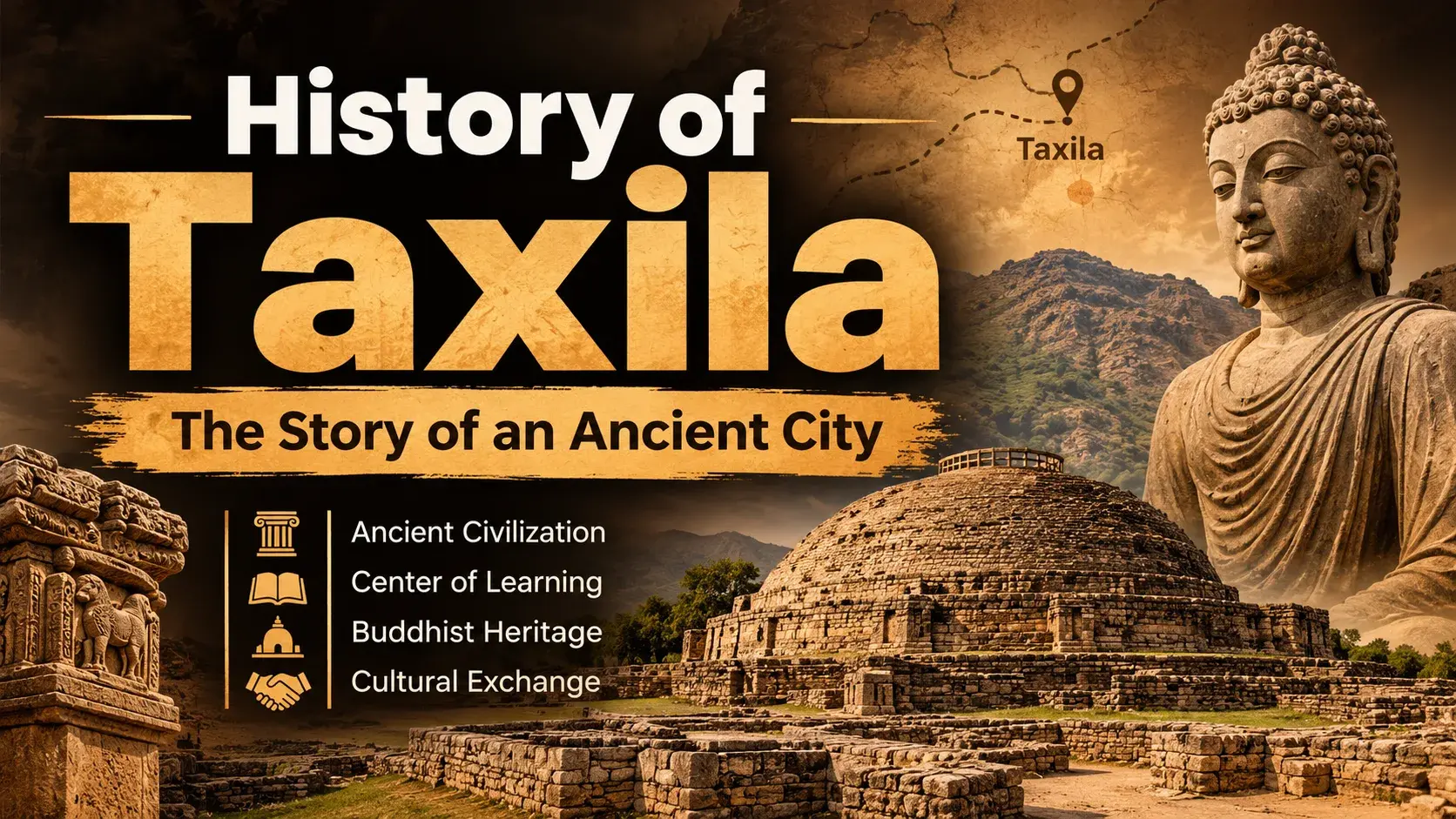
History of Taxila
Discover the ancient civilization, Buddhist heritage, and remarkable history of Taxila.
Histroy Of Taxila Introduction
History of Taxila takes us back thousands of years to one of the most remarkable ancient cities in South Asia. Located in Punjab, Pakistan, Taxila was a famous center of education, trade, religion, and culture. It connected different civilizations and welcomed merchants, scholars, travelers, and Buddhist monks from distant regions. The city became famous for its ancient settlements, beautiful sculptures, Buddhist monasteries, and impressive archaeological remains. Today, Taxila is an important part of Pakistan’s historical heritage and helps us understand the achievements of ancient societies. Like Mohenjo Daro, Taxila also preserves valuable evidence of early human civilization.
The Ancient Origins of Taxila
The early history of Taxila began thousands of years ago when small communities started developing in the Taxila Valley. Over time, these settlements became larger and more organized. People built houses, developed trading activities, and established connections with neighboring regions.
By the sixth century BCE, Taxila had become an important city under the Achaemenid Persian Empire. Its geographical location made it a valuable center for trade and communication. Merchants traveled through the region, exchanging different products, traditions, and ideas. These activities helped Taxila become a prosperous ancient city.
Taxila and the Gandhara Civilization
Histroy Of Taxila became one of the most important centers of the ancient Gandhara region. Gandhara was famous for its Buddhist heritage, impressive sculptures, and cultural diversity.
Different civilizations influenced the development of Taxila, including Persian, Greek, Central Asian, and local cultures. These influences created a unique artistic style known as Gandharan art. Artists produced beautiful sculptures of Buddha and other religious figures.
The History of Taxila shows how different civilizations shared their traditions and knowledge. This cultural exchange made the city an important historical and religious center.
Alexander the Great’s Arrival in Taxila
One of the most interesting events in the History of Taxila occurred in 326 BCE when Alexander the Great entered the region during his campaign in South Asia.
At that time, Taxila was ruled by a king named Ambhi, who established friendly relations with Alexander. The city became an important location during Alexander’s journey through the region.
After Alexander’s death in 323 BCE, his empire gradually divided. Later, Taxila became part of the Mauryan Empire under Chandragupta Maurya. During this period, the city continued to develop as an important political and cultural center.
Taxila as an Ancient Center Of Learning
Histroy Of Taxila is widely remembered for its connection with ancient education. Students and scholars traveled from different regions to study subjects such as medicine, philosophy, politics, mathematics, and religious teachings.
However, Taxila was not a modern university with one central campus. Education generally took place through individual teachers and smaller learning communities.
Buddhism also played an important role in the city’s development. Buddhist monasteries became places of learning, meditation, and religious discussion. Monks and visitors traveled from different regions to explore Buddhist teachings and traditions.
Famous Ancient Cities of Taxila
The archaeological area of Taxila contains several ancient settlements that represent different historical periods.
Bhir Mound: Bhir Mound is one of the earliest historic settlements of Taxila. Its remains include ancient houses, narrow streets, and evidence of early urban development.
Sirkap: Sirkap was established during the second century BCE. It is famous for its planned streets, defensive walls, and Greek architectural influences.
Sirsukh: Sirsukh developed during the Kushan period. Its strong defensive walls and rounded towers show the city’s advanced construction techniques.
Taxila also contains important Buddhist monuments, including Dharmarajika Stupa and Jaulian Monastery.
You can also explore History of Harappa to learn about another important ancient civilization of the Indian subcontinent.
Why Did Taxila Decline?
Despite its success, Taxila eventually experienced a period of decline. Political instability, changing trade routes, and foreign invasions affected the city.
During the fifth century CE, invasions by the Huns contributed to the destruction of important settlements and religious centers. Many buildings and monasteries were damaged or abandoned.
Gradually, Taxila lost its importance as a major center of education, trade, and culture. However, its historical value remained preserved in its archaeological remains.
Rediscovery of Ancient Taxila
In the nineteenth century, archaeologists began exploring the ancient ruins of Taxila. Alexander Cunningham helped identify important historical locations, while Sir John Marshall led major archaeological excavations during the early twentieth century.
These excavations uncovered ancient buildings, coins, sculptures, pottery, and Buddhist monuments. These discoveries helped historians understand the city’s rich past and its connections with different civilizations.
In 1980, Taxila was officially included in the UNESCO World Heritage List because of its outstanding historical and archaeological importance.
The Importance of Taxila Today
Today, Taxila is one of Pakistan’s most valuable historical destinations. Tourists and history lovers visit its archaeological sites, ancient monasteries, and Taxila Museum to explore its fascinating past.
The city represents the achievements of ancient people in education, architecture, trade, and religion. Its historical remains also remind us of the importance of protecting cultural heritage for future generations.
Conclusion: The Lasting Legacy of Taxila
History of Taxila tells the story of an extraordinary ancient city that connected civilizations and encouraged education, trade, and cultural exchange. From its early settlements to its Buddhist monasteries and ancient learning traditions, Histroy Of Taxila played an important role in South Asian history. Although invasions and political changes contributed to its decline, its archaeological treasures continue to reveal valuable information about the past. Today, Histroy Of Taxila remains a symbol of Pakistan’s rich historical heritage and the remarkable achievements of ancient civilizations.