Akbar’s Ibadat Khana: The House Where Ideas Met
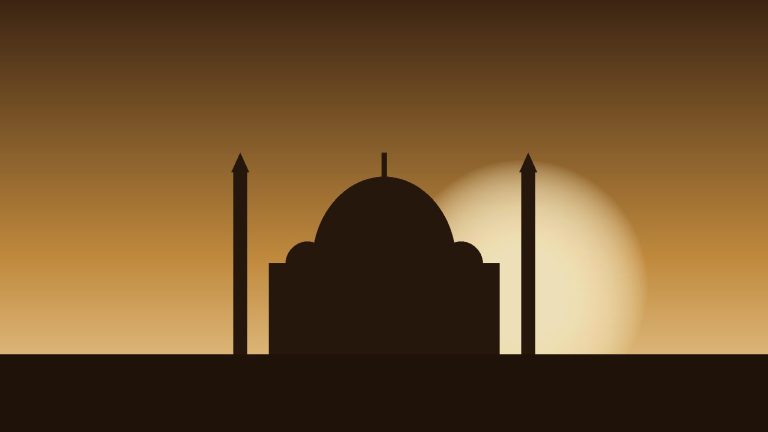
Akbar’s Ibadat Khana was an important place for religious discussions during the Mughal Empire. Located at Fatehpur Sikri, Akbar’s Ibadat Khana welcomed scholars from different religious traditions who shared their beliefs and discussed ideas about faith, knowledge, and peace.Emperor Akbar constructed a unique structure at Fatehpur Sikri in 1575. It was known as the House of Worship, or Ibadat Khana.However, there was no typical royal structure.Here, Akbar asked religious experts to talk about some of the most important issues in life. They discussed religion, justice, truth, and faith.Initially, Muslim academics were mostly involved in these talks. Hindus, Jains, Christians, and Zoroastrians were among the various religious traditions that Akbar later included in the gatherings.In the court of a strong emperor, picture experts from various backgrounds sitting together, exchanging ideas, and challenging one another.Not all conversations were amicable. Scholars frequently differed, and some arguments turned hot. However, Akbar persisted in investigating many perspectives.He started to think that in order to run a diversified empire, a monarch needed more than just military might. In addition, he required discernment, justice, and a comprehension of his subjects.His concept of Sulh-i Kul, or universal peace, was shaped by these encounters. It developed into a key tenet of his strategy for managing members of various religious groupings.Later, Akbar established a spiritual program known as Din-i Ilahi. It was never a widely practiced religion throughout the Mughal Empire, but it was connected to his court and inner circle.There was more to the Ibadat Khana than just theological discussions. It demonstrated Akbar’s developing interest in philosophy, knowledge, and the difficulties of governing a heterogeneous populace.One thing is certain, despite the fact that historians are still debating his personal convictions and intentions: Akbar sought to comprehend concepts outside the boundaries of his own court.The Ibadat Khana was exceptional because of this.Akbar established a forum for the discussion of various views during a time when monarchs frequently utilised religion to bolster their power.His biggest concern was not just how to subjugate an empire but also how to govern it. UNESCO World Heritage Centre
Next episode coming on
All episodes of Babur to Akbar
-
1
 The Prince of Fergana
1 min read
In 1494 a twelve-year-old boy inherits a small kingdom and a world of enemies.
-
2
The Road to Panipat
1 min read
With guns, carts and a gamble, Babur meets the Sultan of Delhi on an April morning in 1526.
-
3
The Boy Emperor
1 min read
Crowned in a garden at thirteen, Akbar must win back an empire his father barely held.
-
4
A City of Red Sandstone
1 min read
Akbar builds a new capital on a ridge near Agra, and names it for victory.
-
5
The Nine Jewels
1 min read
A poet, a musician, a finance minister and a wit: the famous circle around Akbar.
-
6
 Akbar’s Ibadat Khana: A Remarkable Mughal History
2 min read